Saturday, March 28, 2009


Friday, March 27, 2009
Singapore Cabinet Version 3.3 -- same old, same old?
As most of you all should already be aware by now, another set of changes have been made to Singapore's government line-up.
If I am not wrong, this is the third time since he took over as Prime Minister (PM) that PM Lee Hsien Loong has made collective changes to Singapore's government line-up; by collective changes, I mean that numerous changes are being made and not just one or two changes. Hence, I would see the latest set of changes as ushering in "Singapore Cabinet Version 3.3" ("Version 3.3" because PM Lee is independent Singapore's third PM and because the previous configurations of Singapore's government line-up would be "Version 3.0"and so on).
So what are my thoughts about "Singapore Cabinet Version 3.3"?
Well, I suppose that besides the somewhat noteworthy promotions of Mr. Teo Chee Hean to become Deputy PM and Mrs. Lim Hwee Hua to become Singapore's first woman minister, the rest of the announced changes were not all that significant.
The rest of the changes, e.g. the appointment of Mr. Gan Kim Yong to become Minister for Manpower and RADM(NS) Lui Tuck Yew's taking over of Dr. Lee Boon Yang as Minister of Information, Communications and the Arts, were perhaps, in my opinion, expected by people, in that there have already been talk/speculation about those promoted being earmarked for higher office.
In fact, I would contend that even the promotions of Mr. Teo to Deputy PM and Mrs. Lim to a full ministerial position are not all that unexpected. This is firstly considering that even as far back as when PM Lee was about to take over as PM, people were already expecting that he would be appointing Mr. Teo and/or Mr. George Yeo as Deputy PMs; I guess people were somewhat surprised that he did not do so but instead opted to have Dr. Tony Tan (whose position was later taken over Mr. Wong Kan Seng) and Professor S. Jayakumar as his first two Deputy PMs. Secondly, people have perhaps known that, sooner or later, there will be a woman minister and the list of potential candidates for becoming Singapore's first woman minister was not really that long.
Of course, as many observers have pointed out, PM Lee's strategy towards the renewal of Singapore's government leadership seems to one of preferring incremental and gradual change over radical overhauls. This strategy of PM Lee was perhaps evident as far back as his choice of line-up for his first Cabinet team (i.e. "Singapore Cabinet Version 3.0"), which, as pointed out in an earlier essay of mine, consisted "mainly, if not entirely, of ministers who have served under the leadership of his predecessors".
This strategy of incremental changes, rather than radical and sudden changes, is a prudent one which perhaps inspire confidence in Singapore's political stability in not only the eyes of locals but also that of foreign observers. Just imagine how upsetting it will be if Singapore's Cabinet suddenly jumped from "Version 3.0" to "Version 3.99"; it will be akin to suddenly changing from Windows XP to Windows Vista (or Windows 7, I suppose). [aside: I suppose a change in ruling party would then be akin to switching to Linux and/or Leopard from Windows; whether this would be a good switch, I would leave that discussion for perhaps another time]
However, while this strategy of incremental change is a prudent one, I cannot help but wonder if the current pace of change is adequate enough. I mean, to continue using my analogy about computer operating systems, even if "Windows 7" may be an improvement from "Windows Vista", the changes made in "Windows 7" would not be adequate if the outside world and how consumers use technology have changed dramatically; by then, people may have already jumped ship to "Linux" and/or "Leopard" because they got tired of waiting for "Windows" to update itself.
Hence, a pertinent question to ask would be: can we see "Singapore Cabinet Version 4.0" taking shape in "Singapore Cabinet Version 3.3"? Or would there be more iterations of "Version 3.X" before we start to see the genesis of "Version 4.0"?
If I am not wrong, this is the third time since he took over as Prime Minister (PM) that PM Lee Hsien Loong has made collective changes to Singapore's government line-up; by collective changes, I mean that numerous changes are being made and not just one or two changes. Hence, I would see the latest set of changes as ushering in "Singapore Cabinet Version 3.3" ("Version 3.3" because PM Lee is independent Singapore's third PM and because the previous configurations of Singapore's government line-up would be "Version 3.0"and so on).
So what are my thoughts about "Singapore Cabinet Version 3.3"?
Well, I suppose that besides the somewhat noteworthy promotions of Mr. Teo Chee Hean to become Deputy PM and Mrs. Lim Hwee Hua to become Singapore's first woman minister, the rest of the announced changes were not all that significant.
The rest of the changes, e.g. the appointment of Mr. Gan Kim Yong to become Minister for Manpower and RADM(NS) Lui Tuck Yew's taking over of Dr. Lee Boon Yang as Minister of Information, Communications and the Arts, were perhaps, in my opinion, expected by people, in that there have already been talk/speculation about those promoted being earmarked for higher office.
In fact, I would contend that even the promotions of Mr. Teo to Deputy PM and Mrs. Lim to a full ministerial position are not all that unexpected. This is firstly considering that even as far back as when PM Lee was about to take over as PM, people were already expecting that he would be appointing Mr. Teo and/or Mr. George Yeo as Deputy PMs; I guess people were somewhat surprised that he did not do so but instead opted to have Dr. Tony Tan (whose position was later taken over Mr. Wong Kan Seng) and Professor S. Jayakumar as his first two Deputy PMs. Secondly, people have perhaps known that, sooner or later, there will be a woman minister and the list of potential candidates for becoming Singapore's first woman minister was not really that long.
Of course, as many observers have pointed out, PM Lee's strategy towards the renewal of Singapore's government leadership seems to one of preferring incremental and gradual change over radical overhauls. This strategy of PM Lee was perhaps evident as far back as his choice of line-up for his first Cabinet team (i.e. "Singapore Cabinet Version 3.0"), which, as pointed out in an earlier essay of mine, consisted "mainly, if not entirely, of ministers who have served under the leadership of his predecessors".
This strategy of incremental changes, rather than radical and sudden changes, is a prudent one which perhaps inspire confidence in Singapore's political stability in not only the eyes of locals but also that of foreign observers. Just imagine how upsetting it will be if Singapore's Cabinet suddenly jumped from "Version 3.0" to "Version 3.99"; it will be akin to suddenly changing from Windows XP to Windows Vista (or Windows 7, I suppose). [aside: I suppose a change in ruling party would then be akin to switching to Linux and/or Leopard from Windows; whether this would be a good switch, I would leave that discussion for perhaps another time]
However, while this strategy of incremental change is a prudent one, I cannot help but wonder if the current pace of change is adequate enough. I mean, to continue using my analogy about computer operating systems, even if "Windows 7" may be an improvement from "Windows Vista", the changes made in "Windows 7" would not be adequate if the outside world and how consumers use technology have changed dramatically; by then, people may have already jumped ship to "Linux" and/or "Leopard" because they got tired of waiting for "Windows" to update itself.
Hence, a pertinent question to ask would be: can we see "Singapore Cabinet Version 4.0" taking shape in "Singapore Cabinet Version 3.3"? Or would there be more iterations of "Version 3.X" before we start to see the genesis of "Version 4.0"?
Thursday, March 26, 2009
Breaking News!: Changes in Singapore Cabinet Line-up
CNA: "Teo Chee Hean to be appointed DPM from April, Dr Lee Boon Yang retires"
To summarise the changes in the Singapore Cabinet line-up made by PM Lee Hsien Loong:
One, Mr. Teo Chee Hean will be taking over from Professor S. Jayakumar as Deputy Prime Minister, with effect from 1st April 2009. He will retaining his portfolio as Minister of Defence.
Two, Professor Jayakumar will be retaining his position as Coordinating Minister for National Security and have the additional appointment of Senior Minister in the Prime Minister's Office (PMO).
Three, Mr. Gan Kim Yong, who is currently Acting Minister for Manpower, will be taking over as Minister for Manpower.
Four, Mrs. Lim Hwee Hua will be appointed as a Minister in the PMO; she will also be the Second Minister for both the Finance Ministry and the Transport Ministry. [aside: Finally, a woman Minister! And, hmm, ministers in the PMO, while they may not have a specific portfolio, usually have a specific policy area which they are to be in charge of; would Mrs. Lim also be getting a specific policy area to be in charge of?]
Five, RADM(NS) Lui Tuck Yew will be taking over as Acting Minister for Information, Communications and the Arts (MICA) from Dr. Lee Boon Yang; the latter will be retiring from government.
Six, Mr. Teo Ser Luck will be taking over as Mayor of Northeast CDC from Mr. Zainul Abidin Rasheed, with effect from 31st May 2009; the latter will retain his position as Senior Minister of State in the Ministry of Foreign Affairs.
Seven, Mr. Sam Tan will become the Parliamentary Secretary for MICA and Trade and Industry ministry, with effect from 1st July 2009.
For a full list of the changes made, please refer to here.
To summarise the changes in the Singapore Cabinet line-up made by PM Lee Hsien Loong:
One, Mr. Teo Chee Hean will be taking over from Professor S. Jayakumar as Deputy Prime Minister, with effect from 1st April 2009. He will retaining his portfolio as Minister of Defence.
Two, Professor Jayakumar will be retaining his position as Coordinating Minister for National Security and have the additional appointment of Senior Minister in the Prime Minister's Office (PMO).
Three, Mr. Gan Kim Yong, who is currently Acting Minister for Manpower, will be taking over as Minister for Manpower.
Four, Mrs. Lim Hwee Hua will be appointed as a Minister in the PMO; she will also be the Second Minister for both the Finance Ministry and the Transport Ministry. [aside: Finally, a woman Minister! And, hmm, ministers in the PMO, while they may not have a specific portfolio, usually have a specific policy area which they are to be in charge of; would Mrs. Lim also be getting a specific policy area to be in charge of?]
Five, RADM(NS) Lui Tuck Yew will be taking over as Acting Minister for Information, Communications and the Arts (MICA) from Dr. Lee Boon Yang; the latter will be retiring from government.
Six, Mr. Teo Ser Luck will be taking over as Mayor of Northeast CDC from Mr. Zainul Abidin Rasheed, with effect from 31st May 2009; the latter will retain his position as Senior Minister of State in the Ministry of Foreign Affairs.
Seven, Mr. Sam Tan will become the Parliamentary Secretary for MICA and Trade and Industry ministry, with effect from 1st July 2009.
For a full list of the changes made, please refer to here.
Friday, March 20, 2009
Response Email from RWS with regards to petition
Last week, I sent a petition email to Resorts World at Sentosa (RWS) to express my concern about their plans to bring in whale sharks for its planned oceanarium.
And, earlier today, I received an email sent out by the Marine Life Park Team/Corporate Social Responsibility Office with regards to the petition emails it have been receiving.
The contents of the email are as below in italics (emphasis mine)...
Dear all,
Thank you for the interest that you have expressed towards our Marine Life Park. Although the feedback we have received till now is not always positive, it shows how concerned everyone is towards the success of the Marine Life Park and its ability to balance the need to educate the public on marine conservation while at the same time not doing anything to harm the marine environment.
As of today, over 3,000 of you have written to us and we hope you can spare a few minutes for our side of the story. As an organization that is committed to inspire the conservation of the ocean through education, we fully understand your concerns with regards to the feasibility of whale sharks in captivity.
That is why we have been, and still are - to this date - considering alternatives for our overall Marine Life Park design plans, while simultaneously peer reviewing our animal collection and exhibits content.
While we go about our work, we also want to highlight that the whale shark exhibit at the Marine Life Park was submitted as part of the winning bid in an international competition for the Integrated Resort on Sentosa in late 2006. As such, the organization is bound to deliver the integrity of the bid, and any proposed replacement for the whale sharks must be defensible in that it must be viable and be as broad, if not compelling, in its appeal to bring in visitors to Singapore - the reason Singapore decided to have the integrated resorts.
Last week, we put out a press statement specifying that plans for the Marine Life Park are still being finalized and options are being explored. Two things are being done right now: consolidating the education and conservation studies of what aquariums have done for potential collection species, and assessing how the Marine Life Park and its conservation and research programs might contribute further to the scientific knowledge of the species.
We do not take these undertakings lightly and as such, we need time to investigate all available options to provide Singapore with a world-class Marine Life Park. The process of replacing promised attractions in a winning bid is neither simple nor unilateral. Papers, presentations, permits and many rounds of fine-tuning and debate are required. We welcome ideas at csr@rwsentosa.com.
We apologise for not being able to reply singularly to everyone. Do visit our website http://www.rwsentosa.com/en_marinelifepark.html to know us better. There, you can also read about our conservation efforts in both the marine and environmental fields. The Marine Life Park is committed to engage all persons who share our goal: the conservation of the oceans and it (sic) inhabitants. Our commitment has not changed.
Yours sincerely,
The Marine Life Park team
Interestingly enough, this email/letter can also be found through RWS's website
Hmm... So they are requesting more time in order to properly address the concerns of those who petitioned them. But how much time do they need? I hope that this is not a stalling tactic on their part. Hopefully, they will continue to provide updates and be transparent about their plans & investigations.
Update
As of 16/5/2009, it is reported that RWS have decided to abandon its plans to bring in whale sharks.
And, earlier today, I received an email sent out by the Marine Life Park Team/Corporate Social Responsibility Office with regards to the petition emails it have been receiving.
The contents of the email are as below in italics (emphasis mine)...
Dear all,
Thank you for the interest that you have expressed towards our Marine Life Park. Although the feedback we have received till now is not always positive, it shows how concerned everyone is towards the success of the Marine Life Park and its ability to balance the need to educate the public on marine conservation while at the same time not doing anything to harm the marine environment.
As of today, over 3,000 of you have written to us and we hope you can spare a few minutes for our side of the story. As an organization that is committed to inspire the conservation of the ocean through education, we fully understand your concerns with regards to the feasibility of whale sharks in captivity.
That is why we have been, and still are - to this date - considering alternatives for our overall Marine Life Park design plans, while simultaneously peer reviewing our animal collection and exhibits content.
While we go about our work, we also want to highlight that the whale shark exhibit at the Marine Life Park was submitted as part of the winning bid in an international competition for the Integrated Resort on Sentosa in late 2006. As such, the organization is bound to deliver the integrity of the bid, and any proposed replacement for the whale sharks must be defensible in that it must be viable and be as broad, if not compelling, in its appeal to bring in visitors to Singapore - the reason Singapore decided to have the integrated resorts.
Last week, we put out a press statement specifying that plans for the Marine Life Park are still being finalized and options are being explored. Two things are being done right now: consolidating the education and conservation studies of what aquariums have done for potential collection species, and assessing how the Marine Life Park and its conservation and research programs might contribute further to the scientific knowledge of the species.
We do not take these undertakings lightly and as such, we need time to investigate all available options to provide Singapore with a world-class Marine Life Park. The process of replacing promised attractions in a winning bid is neither simple nor unilateral. Papers, presentations, permits and many rounds of fine-tuning and debate are required. We welcome ideas at csr@rwsentosa.com.
We apologise for not being able to reply singularly to everyone. Do visit our website http://www.rwsentosa.com/en_marinelifepark.html to know us better. There, you can also read about our conservation efforts in both the marine and environmental fields. The Marine Life Park is committed to engage all persons who share our goal: the conservation of the oceans and it (sic) inhabitants. Our commitment has not changed.
Yours sincerely,
The Marine Life Park team
Interestingly enough, this email/letter can also be found through RWS's website
Hmm... So they are requesting more time in order to properly address the concerns of those who petitioned them. But how much time do they need? I hope that this is not a stalling tactic on their part. Hopefully, they will continue to provide updates and be transparent about their plans & investigations.
Update
As of 16/5/2009, it is reported that RWS have decided to abandon its plans to bring in whale sharks.
Earth Hour 2009 in Singapore
I am voting for the Earth; so should you
What: Turning off of lights (and other electrical appliances if possible) for one hour "to deliver a powerful message about the need for action on global warming"
When: 28th March 2009 (Saturday), 8.30pm-9.30pm
Where: Across the whole world, including Singapore
Who: Everyone interested in combating global warming/climate change (yes, that should include you all also)
Wednesday, March 18, 2009
"V for Vendetta" censored?
Warning: Possible spoilers ahead; do not read if you all have not read/watch "V for Vendetta" and are intending to do so.
Having watched the movie "V for Vendetta" in the cinema when it was first released in Singapore and having read, for several times, the graphic novel it is based on, I felt that there was something amiss with the version shown on TV yesterday night (Channel 5, 2200h-0030h).
I noticed that the segment involving Evey's imprisonment by V seem somewhat shortened; one moment, she was still being tortured and suddenly, she overcame her fear of death. What was even more weird was that in a later scene in which Evey was confronting V, she can be seen showing holding on tightly to what appears to be a parchment of sorts.
The parchment in Evey's hand reminded me (and I checked with my copy of the graphic novel) that the reason she overcame her fear of death was because she was inspired by the autobiography written by a lesbian prisoner.
Realising the above, it was evident to me that the segment involving Evey reading the autobiography of the lesbian prisoner was removed because of its positive reference to homosexual themes; this was, of course, not the first time, that local TV censored positive references to homosexuality.
For those of you all who watched last night's censored version of "V for Vendetta" (and also those of you all who are curious about what was censored out), here's what you did not see...
Having watched the movie "V for Vendetta" in the cinema when it was first released in Singapore and having read, for several times, the graphic novel it is based on, I felt that there was something amiss with the version shown on TV yesterday night (Channel 5, 2200h-0030h).
I noticed that the segment involving Evey's imprisonment by V seem somewhat shortened; one moment, she was still being tortured and suddenly, she overcame her fear of death. What was even more weird was that in a later scene in which Evey was confronting V, she can be seen showing holding on tightly to what appears to be a parchment of sorts.
The parchment in Evey's hand reminded me (and I checked with my copy of the graphic novel) that the reason she overcame her fear of death was because she was inspired by the autobiography written by a lesbian prisoner.
Realising the above, it was evident to me that the segment involving Evey reading the autobiography of the lesbian prisoner was removed because of its positive reference to homosexual themes; this was, of course, not the first time, that local TV censored positive references to homosexuality.
For those of you all who watched last night's censored version of "V for Vendetta" (and also those of you all who are curious about what was censored out), here's what you did not see...
P.S. I find it rather ironic that the local TV should censor "V for Vendetta", in light of the anti-censorship theme contained within the movie.
P.S. 29/7/2012 I also find it most ironic that while the lesbian story is censored, this other segment is left intact.
P.S. 29/7/2012 I also find it most ironic that while the lesbian story is censored, this other segment is left intact.
Saturday, March 14, 2009
Should Singapore legalise pornography?
Yesterday evening, I attended the grand finals of "Policy Studies 2009" which is, though one would not be able to discern this from the event title, a debate competition organised by the NUS Students' Political Association.
I must confess that I was partly motivated to attend the event due to the rather interesting topic the teams were debating about. The debate topic was, as some of you all may have already guessed from the title of this post, "Should Singapore legalise pornography?".
Good points were brought up and discussed by both the proposition team (from Raffles JC) and the opposition team (from Pioneer JC). However, in light of the fact that giving a blow-by-blow account of the debate would be rather tedious (for me) and an uninteresting read (for you all), I would instead just highlight and summarise the noteworthy arguments of both teams. I would then have a section about which team won the debate and some personal remarks about both the debate itself and the debate topic.
The Proposition's Arguments
The proposition started off by stating that by advocating for the legalisation of porn in Singapore, they are not advocating for a free-for-all situation. Instead, they stated that certain limiting conditions would still have to be in place for regulatory purposes.
These conditions would include: one, there should be no overt advertising of porn (this would imply that, as the proposition argued, only those wishing to acquire porn would come into contact with it); two, a minimum age limit should be imposed; three, the porn material should only involve consenting adults; four, no harm should be done to those involved and five, the porn material should not be of a nature such that there is overwhelming moral opposition against it e.g. child pornography.
Moving on, the proposition argued that despite the non-legality of porn in Singapore, it is nevertheless already widely available in Singapore through mediums such as the internet. And it would seem that Singaporeans are not exactly abstaining from the consumption of it. In fact, citing a survey done by Readers' Digest, about 76% of Singaporeans find non-violent porn acceptable.
In light of the above, it was argued by the proposition that since the current ban on porn (interestingly enough, it was pointed out that Singapore does not ban the viewing of porn but only the possession and distribution of it) in Singapore is not effective, it would perhaps be better for Singapore to legalise it so that it can be better regulated. A complete ban on porn would not only not curb the supply of it (since there is significant demand for it) but also perhaps create a "forbidden fruit" effect and cause people to have an even greater demand for it. Also, the criminalisation of porn is, in effect, make otherwise law-abiding and morally upright Singaporeans who consume porn "criminals"; a most ludicrous situation this is.
[Personal note: listening to the proposition's arguments above, I was reminded of the arguments/criticism made against the Prohibition]
And as for arguments that the legalisation of porn would lead to an increase in the occurrences of social ills e.g. sexual crimes, the proposition replied that as of now, there is yet to be any study that conclusively prove that there is a causal link between (the legalisation of) porn and the occurrence of sexual crimes. In fact, as the proposition stated, a study conducted in Japan discovered that sexual crimes rates did not increase after the legalisation of porn in Japan; this interesting discovery could perhaps be due to people having, with the legalisation of porn, a "legitimate" outlet for their sexual desires.
With regards to the argument that porn is immoral, the proposition argued that they do not believe in morality being an absolute. Although they did not make it explicit, the proposition seems to be arguing that "morality" is neither static nor universal and thus Singapore's policy towards porn should be shaped by the unique circumstances present in Singapore. On that note, since there is the demand for it and since a majority of Singaporeans find non-violent porn acceptable, there should be a legalising of porn in Singapore. Also, the state, as argued by the proposition, should not act as a moral agency which decides what is moral and what is not for its citizens through its legislation and policies.
In response to the argument that porn should not be legalised because women are objectified as being sexual objects, the proposition drew an analogy between modelling and porn. If modelling, in which models use their bodies to earn a living, is permitted in Singapore, why should porn, which the proposition argues as being essentially also the usage of one's body to earn a living, be illegal?
In addition, in response to the argument that, by legalising porn in Singapore, a "slippery slope" would be created for other undesirable acts, e.g. bestiality, pedophilia and drug usage, to become legalised, the proposition put forth the argument that in contrast with porn, there remains overwhelming non-acceptance of those abovementioned undesirable acts and thus, the "slippery slope" effect is irrelevant in this case.
The Opposition's Arguments
The opposition began their argument by questioning the need to legalise porn [personal note: I sortof agree with this point in that I do not see porn as being essential to living a "good" life but, of course, as my friend puts it, it's not about there being a need to legalise porn but rather why is there a need to not legalise porn].
The effectiveness of the regulatory conditions proposed by the proposition was also questioned. If currently underage youth are able to get their hands on cigarettes and alcoholic drinks despite the minimum age limits imposed on these items, would imposing a minimum age limit on porn work? And in light of the fact that the majority of porn is produced overseas, the opposition team questioned the feasibility of trying to regulate porn to fit with the conditions proposed by the proposition.
It was also argued by the opposition that porn should not be legalised in Singapore because it objectifies women as being only sexual objects and that it demeans sex. The opposition also argued that porn is harmful because it will corrupt the minds of the young and result in an increase in the occurrences of sexual crimes.
An oft-repeated argument by the opposition was that porn, being immoral, should not be legalised. The state, as the opposition argues, should act as a "moral compass" and set the proper example for the people, who do not always necessarily make the correct moral choices, by not legalising porn [later, when questioned about whether they are giving too much room for government intervention with this argument of theirs, the opposition replied that there are limits set in the Constitution with regards to the powers of the government].
Interestingly enough, while the proposition used the argument that Singapore's policy towards porn should be shaped by its own unique circumstances to bolster their case, the opposition also used the same argument to argue that Singapore should not go the way of legalising porn just because other countries have done so.
The opposition also put forth the argument that by legalising porn, Singapore's government would be going against its long-standing messages on promoting responsible sexual behaviour. And as was already mentioned above, the opposition also argued that by legalising porn, a "slippery slope" effect would be created and other undesirable acts may also become legalised.
Disagreeing with the proposition that a "forbidden fruit" effect will emerge due to a ban on porn, the opposition said that proper sex education would curb the sexual curiousity of local youth; they also added that porn cannot count as proper sex education.
Verdict and Personal Remarks
In the end, it was decided by the judges that the proposition team was the better of the two teams.
I would agree with the judges' decision as I also felt that while the opposition team gave a valiant effort, the proposition's arguments appeared to be more reasonable and convincing. And as pointed out by the judges, the proposition's style of presentation also aided them.
However, as much as I can appreciate and agree with the proposition's logic and arguments on an intellectual level, I personally would still not endorse a decision to legalise porn in Singapore. I guess this is mainly a visceral decision of mine. The only real reason I can perhaps give as to why I would most probably not endorse a decision to legalise porn would be that, as I have noted above, I do not see a real need for it to be legalised. As I see it, even with the current non-legalising of porn in Singapore, people are not exactly suffering, are they?
And while there may indeed come a day in which porn would become legalised, the time now is perhaps not yet ripe for such a situation. I mean, while it is perhaps common knowledge that porn is an "open secret" (especially for guys), I suppose most guys would still feel somewhat uneasy about confessing to people (unless they know them well enough) that they consume porn (of course, I will concede that this uneasiness with confessing one's consumption of porn could be due to the fact that it is not legalised).
To end off this post on a lighter note, allow me to share this joke regarding men and porn.
"If you ask 10 guy friends whether they watch porn, 8 will be honest and answer 'yes', 1 will lie and answer 'no' and the last guy will answer 'no' and really be honest"
I must confess that I was partly motivated to attend the event due to the rather interesting topic the teams were debating about. The debate topic was, as some of you all may have already guessed from the title of this post, "Should Singapore legalise pornography?".
Good points were brought up and discussed by both the proposition team (from Raffles JC) and the opposition team (from Pioneer JC). However, in light of the fact that giving a blow-by-blow account of the debate would be rather tedious (for me) and an uninteresting read (for you all), I would instead just highlight and summarise the noteworthy arguments of both teams. I would then have a section about which team won the debate and some personal remarks about both the debate itself and the debate topic.
The Proposition's Arguments
The proposition started off by stating that by advocating for the legalisation of porn in Singapore, they are not advocating for a free-for-all situation. Instead, they stated that certain limiting conditions would still have to be in place for regulatory purposes.
These conditions would include: one, there should be no overt advertising of porn (this would imply that, as the proposition argued, only those wishing to acquire porn would come into contact with it); two, a minimum age limit should be imposed; three, the porn material should only involve consenting adults; four, no harm should be done to those involved and five, the porn material should not be of a nature such that there is overwhelming moral opposition against it e.g. child pornography.
Moving on, the proposition argued that despite the non-legality of porn in Singapore, it is nevertheless already widely available in Singapore through mediums such as the internet. And it would seem that Singaporeans are not exactly abstaining from the consumption of it. In fact, citing a survey done by Readers' Digest, about 76% of Singaporeans find non-violent porn acceptable.
In light of the above, it was argued by the proposition that since the current ban on porn (interestingly enough, it was pointed out that Singapore does not ban the viewing of porn but only the possession and distribution of it) in Singapore is not effective, it would perhaps be better for Singapore to legalise it so that it can be better regulated. A complete ban on porn would not only not curb the supply of it (since there is significant demand for it) but also perhaps create a "forbidden fruit" effect and cause people to have an even greater demand for it. Also, the criminalisation of porn is, in effect, make otherwise law-abiding and morally upright Singaporeans who consume porn "criminals"; a most ludicrous situation this is.
[Personal note: listening to the proposition's arguments above, I was reminded of the arguments/criticism made against the Prohibition]
And as for arguments that the legalisation of porn would lead to an increase in the occurrences of social ills e.g. sexual crimes, the proposition replied that as of now, there is yet to be any study that conclusively prove that there is a causal link between (the legalisation of) porn and the occurrence of sexual crimes. In fact, as the proposition stated, a study conducted in Japan discovered that sexual crimes rates did not increase after the legalisation of porn in Japan; this interesting discovery could perhaps be due to people having, with the legalisation of porn, a "legitimate" outlet for their sexual desires.
With regards to the argument that porn is immoral, the proposition argued that they do not believe in morality being an absolute. Although they did not make it explicit, the proposition seems to be arguing that "morality" is neither static nor universal and thus Singapore's policy towards porn should be shaped by the unique circumstances present in Singapore. On that note, since there is the demand for it and since a majority of Singaporeans find non-violent porn acceptable, there should be a legalising of porn in Singapore. Also, the state, as argued by the proposition, should not act as a moral agency which decides what is moral and what is not for its citizens through its legislation and policies.
In response to the argument that porn should not be legalised because women are objectified as being sexual objects, the proposition drew an analogy between modelling and porn. If modelling, in which models use their bodies to earn a living, is permitted in Singapore, why should porn, which the proposition argues as being essentially also the usage of one's body to earn a living, be illegal?
In addition, in response to the argument that, by legalising porn in Singapore, a "slippery slope" would be created for other undesirable acts, e.g. bestiality, pedophilia and drug usage, to become legalised, the proposition put forth the argument that in contrast with porn, there remains overwhelming non-acceptance of those abovementioned undesirable acts and thus, the "slippery slope" effect is irrelevant in this case.
The Opposition's Arguments
The opposition began their argument by questioning the need to legalise porn [personal note: I sortof agree with this point in that I do not see porn as being essential to living a "good" life but, of course, as my friend puts it, it's not about there being a need to legalise porn but rather why is there a need to not legalise porn].
The effectiveness of the regulatory conditions proposed by the proposition was also questioned. If currently underage youth are able to get their hands on cigarettes and alcoholic drinks despite the minimum age limits imposed on these items, would imposing a minimum age limit on porn work? And in light of the fact that the majority of porn is produced overseas, the opposition team questioned the feasibility of trying to regulate porn to fit with the conditions proposed by the proposition.
It was also argued by the opposition that porn should not be legalised in Singapore because it objectifies women as being only sexual objects and that it demeans sex. The opposition also argued that porn is harmful because it will corrupt the minds of the young and result in an increase in the occurrences of sexual crimes.
An oft-repeated argument by the opposition was that porn, being immoral, should not be legalised. The state, as the opposition argues, should act as a "moral compass" and set the proper example for the people, who do not always necessarily make the correct moral choices, by not legalising porn [later, when questioned about whether they are giving too much room for government intervention with this argument of theirs, the opposition replied that there are limits set in the Constitution with regards to the powers of the government].
Interestingly enough, while the proposition used the argument that Singapore's policy towards porn should be shaped by its own unique circumstances to bolster their case, the opposition also used the same argument to argue that Singapore should not go the way of legalising porn just because other countries have done so.
The opposition also put forth the argument that by legalising porn, Singapore's government would be going against its long-standing messages on promoting responsible sexual behaviour. And as was already mentioned above, the opposition also argued that by legalising porn, a "slippery slope" effect would be created and other undesirable acts may also become legalised.
Disagreeing with the proposition that a "forbidden fruit" effect will emerge due to a ban on porn, the opposition said that proper sex education would curb the sexual curiousity of local youth; they also added that porn cannot count as proper sex education.
Verdict and Personal Remarks
In the end, it was decided by the judges that the proposition team was the better of the two teams.
I would agree with the judges' decision as I also felt that while the opposition team gave a valiant effort, the proposition's arguments appeared to be more reasonable and convincing. And as pointed out by the judges, the proposition's style of presentation also aided them.
However, as much as I can appreciate and agree with the proposition's logic and arguments on an intellectual level, I personally would still not endorse a decision to legalise porn in Singapore. I guess this is mainly a visceral decision of mine. The only real reason I can perhaps give as to why I would most probably not endorse a decision to legalise porn would be that, as I have noted above, I do not see a real need for it to be legalised. As I see it, even with the current non-legalising of porn in Singapore, people are not exactly suffering, are they?
And while there may indeed come a day in which porn would become legalised, the time now is perhaps not yet ripe for such a situation. I mean, while it is perhaps common knowledge that porn is an "open secret" (especially for guys), I suppose most guys would still feel somewhat uneasy about confessing to people (unless they know them well enough) that they consume porn (of course, I will concede that this uneasiness with confessing one's consumption of porn could be due to the fact that it is not legalised).
To end off this post on a lighter note, allow me to share this joke regarding men and porn.
"If you ask 10 guy friends whether they watch porn, 8 will be honest and answer 'yes', 1 will lie and answer 'no' and the last guy will answer 'no' and really be honest"
Thursday, March 12, 2009
Petition against having whalesharks at RWS

While going through my RSS news feeds, I came across a news item regarding the setting up of a petition by local animal welfare groups against Resorts World at Sentosa's plans to bring in whale sharks for its planned oceanarium.
I have added my signature to the petition and decided that I would spread the word about it here.
For those of you all who may be interested, the petition can be found here.
Updates
As of 20/3/2009, RWS sent out an email response to the petition.
And as of 16/5/2009, it is reported that RWS have decided to abandon its plans to bring in whale sharks.
I have added my signature to the petition and decided that I would spread the word about it here.
For those of you all who may be interested, the petition can be found here.
Updates
As of 20/3/2009, RWS sent out an email response to the petition.
And as of 16/5/2009, it is reported that RWS have decided to abandon its plans to bring in whale sharks.
Sunday, March 08, 2009
International Women's Day 2009

International Women's Day 2009
UN Secretary-General's remarks on International Women's Day (Transcript)
"In many countries, at workshops and community meetings, men are teaching other men that there is another way – that “real men don't hit women”, let alone rape them. That real men respect women" -- UN Secretary-General Ban Ki Moon (emphasis mine)
"Violence against women cannot be tolerated, in any form, in any context, in any circumstance, by any political leader or by any government. The time to change is now. Only by standing together and speaking out can we make a difference. On this International Women's Day, let us resolve to do that" -- UN Secretary-General Ban Ki Moon (emphasis mine)
UN Secretary-General's remarks on International Women's Day (Transcript)
"In many countries, at workshops and community meetings, men are teaching other men that there is another way – that “real men don't hit women”, let alone rape them. That real men respect women" -- UN Secretary-General Ban Ki Moon (emphasis mine)
"Violence against women cannot be tolerated, in any form, in any context, in any circumstance, by any political leader or by any government. The time to change is now. Only by standing together and speaking out can we make a difference. On this International Women's Day, let us resolve to do that" -- UN Secretary-General Ban Ki Moon (emphasis mine)
Here's wishing all women around the world, especially my women acquaintances, a Happy International Women's Day 2009!
And since the theme for this year's International Women's Day is "Women and men united to end violence against women and girls", this recent commentary that made reference to Rihanna's recent run-in with Chris Brown is, I would think, rather apropos. You all may also want to take a look at this article ("UN decries violence against women")
For those of you all who wish to read/re-read my previous postings on the issue of gender equality, they can be found here, here, here, here and here.
And since the theme for this year's International Women's Day is "Women and men united to end violence against women and girls", this recent commentary that made reference to Rihanna's recent run-in with Chris Brown is, I would think, rather apropos. You all may also want to take a look at this article ("UN decries violence against women")
For those of you all who wish to read/re-read my previous postings on the issue of gender equality, they can be found here, here, here, here and here.
Friday, March 06, 2009
Event: Reel Horizons Series II -- "Who Owns What?" by NUS Philosophy Department

What: "A film and discussion session on the implications of coporate ownership. Come and debate with our panelists as we explore the issue and make your voice heard. The film will be "The Corporation," directed by Mark Achbar, Jennifer Abbott, and Joel Bakan"
Who: The panellists would include Assistant Professor Christopher Brown, Assistant Professor Kyle Swan and Associate Professor Anh Tuan Nyuen
When: 10/3/2009, Tuesday, 1400h-1600h
Where: NUS Central Library Level 4, Theatrette 2 (please refer to here for a map of the place)
For inquiries, please contact reelhorizons@gmail.com and/or 65163896
Facebook event page
Note: As NUS Central Library only allows entry to visitors with either NUS staff or student identification cards (visitors are required to scan their identification cards near the entrance before entry is allowed), if any of you all are not from the NUS community but are interested in attending the event, you are advised to first contact the event organisers (who, the last time I checked, are negotiating with the library administration on the issue of allowing non-NUS people to enter the library to attend the event).
Who: The panellists would include Assistant Professor Christopher Brown, Assistant Professor Kyle Swan and Associate Professor Anh Tuan Nyuen
When: 10/3/2009, Tuesday, 1400h-1600h
Where: NUS Central Library Level 4, Theatrette 2 (please refer to here for a map of the place)
For inquiries, please contact reelhorizons@gmail.com and/or 65163896
Facebook event page
Note: As NUS Central Library only allows entry to visitors with either NUS staff or student identification cards (visitors are required to scan their identification cards near the entrance before entry is allowed), if any of you all are not from the NUS community but are interested in attending the event, you are advised to first contact the event organisers (who, the last time I checked, are negotiating with the library administration on the issue of allowing non-NUS people to enter the library to attend the event).
Event: "The Recession and Its Impact on Singapore Society" by NUSDSC
I was recently notified about two events and thought that I should share the information about them with those of you all who may be interested in attending them; I would post the information for the first event here and for the second event in the following post.
What: "The NUS Democratic Socialist Club will be organizing a seminar titled The Recession and Its Impact On Singapore Society. It focuses on the ongoing recession, its profound and crippling impact on the economy and how it transcends directly to society."
Who: The speakers will be Professor Alexius Pereira (Sociology Dept), Professor Sam Ouliaris (NUS Business Sch), Ms Corrine Ong (Director, NUS Career Centre)
When: 18/3/2009, Wednesday, 1830h-2000h
Where: LT14, NUS (please refer to here for a map of the place)
For reservation, please email the NUSDSC president Fairus Jasmin at fairuscanfly@hotmail.com
Facebook event page
Refreshments, in the form of halal food, would be provided.
What: "The NUS Democratic Socialist Club will be organizing a seminar titled The Recession and Its Impact On Singapore Society. It focuses on the ongoing recession, its profound and crippling impact on the economy and how it transcends directly to society."
Who: The speakers will be Professor Alexius Pereira (Sociology Dept), Professor Sam Ouliaris (NUS Business Sch), Ms Corrine Ong (Director, NUS Career Centre)
When: 18/3/2009, Wednesday, 1830h-2000h
Where: LT14, NUS (please refer to here for a map of the place)
For reservation, please email the NUSDSC president Fairus Jasmin at fairuscanfly@hotmail.com
Facebook event page
Refreshments, in the form of halal food, would be provided.
Sunday, March 01, 2009
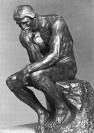
The Philosophers Do Not Get It?
As I was scanning through today's newspapers earlier on, I took a slight double take at statements made by Mr. Ronald Wong, a law student at NUS and a co-founder of The Parables Company, in the weekly "Bookends" section, which features interviews with people about the books they are reading and their favourite books.
Commenting on "A History of Western Philosophy" (by Bertrand Russell), Mr. Wong stated: "This study of man's pursuit of knowledge and quest to fill his soul speaks volumes about his longing for a paradise. But it is strange how most philosophers got it wrong, yet we still place them up on a pedestal. Still, it is a pleasurable read" (emphasis mine).
Hmm... Reading the above remark by Mr. Wong, especially the statement in bold, I cannot help wondering what he meant when he said that "most philosophers got it wrong".
Who are these "most philosophers" he is referring to? And what is the "it" they have supposedly gotten wrong?
Well, although I may be mistaken, I would guess that, looking at the statement he made before the statement in question, Mr. Wong was implying that philosophers were not able to properly discern humankind's "longing for a paradise".
Yet, leaving aside the question of whether humankind really long for a "paradise" (on that note, it is also unclear what Mr. Wong meant by "paradise"; did he, with his evident religious background as a Christian, mean it literally or figuratively?), I cannot help but wonder how Mr. Wong can be certain that the philosophers have gotten it (whatever "it" may be) wrong? Also, who then, in Mr. Wong's opinion, has gotten it right? Himself? Can it not be the case that the philosophers gotten it right and Mr. Wong mistakenly thinks that they have gotten it wrong?
I do not know about you all but to make a statement about how "most philosophers got it wrong" strongly suggests a sense of intellectual arrogance, if not smugness.
That aside, I also take issue with Mr. Wong's suggestion about how people place philosophers "up on a pedestal" despite them supposedly getting it wrong.
Well, although I may be wrong about this but I would think that while it is true that some philosophers are respected for properly discerning the "truth", a more important reason why people have great respect for philosophers is that the latter have relentlessly employed intellect and reason to try to find out the "truth" and in the process of doing so, offered various key insights into a myriad of issues. Some, like the pre-Socratic philosophers, may have been mistaken about there being a single element upon which everything is based on but it remains admirable that, unlike their contemporaries, these philosophers used their intellect and reason.
To end off, I think I need to say that it may be the case that Mr. Wong's words were misrepresented and/or that I misinterpreted them. If so, I apologise. Yet, of course, my grievance was not targeted against Mr. Wong but rather against the attitude that philosophers have gotten it wrong.
Commenting on "A History of Western Philosophy" (by Bertrand Russell), Mr. Wong stated: "This study of man's pursuit of knowledge and quest to fill his soul speaks volumes about his longing for a paradise. But it is strange how most philosophers got it wrong, yet we still place them up on a pedestal. Still, it is a pleasurable read" (emphasis mine).
Hmm... Reading the above remark by Mr. Wong, especially the statement in bold, I cannot help wondering what he meant when he said that "most philosophers got it wrong".
Who are these "most philosophers" he is referring to? And what is the "it" they have supposedly gotten wrong?
Well, although I may be mistaken, I would guess that, looking at the statement he made before the statement in question, Mr. Wong was implying that philosophers were not able to properly discern humankind's "longing for a paradise".
Yet, leaving aside the question of whether humankind really long for a "paradise" (on that note, it is also unclear what Mr. Wong meant by "paradise"; did he, with his evident religious background as a Christian, mean it literally or figuratively?), I cannot help but wonder how Mr. Wong can be certain that the philosophers have gotten it (whatever "it" may be) wrong? Also, who then, in Mr. Wong's opinion, has gotten it right? Himself? Can it not be the case that the philosophers gotten it right and Mr. Wong mistakenly thinks that they have gotten it wrong?
I do not know about you all but to make a statement about how "most philosophers got it wrong" strongly suggests a sense of intellectual arrogance, if not smugness.
That aside, I also take issue with Mr. Wong's suggestion about how people place philosophers "up on a pedestal" despite them supposedly getting it wrong.
Well, although I may be wrong about this but I would think that while it is true that some philosophers are respected for properly discerning the "truth", a more important reason why people have great respect for philosophers is that the latter have relentlessly employed intellect and reason to try to find out the "truth" and in the process of doing so, offered various key insights into a myriad of issues. Some, like the pre-Socratic philosophers, may have been mistaken about there being a single element upon which everything is based on but it remains admirable that, unlike their contemporaries, these philosophers used their intellect and reason.
To end off, I think I need to say that it may be the case that Mr. Wong's words were misrepresented and/or that I misinterpreted them. If so, I apologise. Yet, of course, my grievance was not targeted against Mr. Wong but rather against the attitude that philosophers have gotten it wrong.
Subscribe to:
Posts (Atom)

 Posts
Posts